• HOME
  • ABOUT
  • FREE VIDEO TRAINING
  • LOUISE ON THE BEET
  • SERVICES
Menu

Louise Carr

Street Address
City, State, Zip
Phone Number
Holistic Nutrition Counselling

Your Custom Text Here

Louise Carr

  • HOME
  • ABOUT
  • FREE VIDEO TRAINING
  • LOUISE ON THE BEET
  • SERVICES
Louise_Banner.jpg

Recipes and Posts

High Protein and Fibre Morning Glory Muffins

January 19, 2024 Louise Carr

If you get your information about menopause online, you would think your levels of estrogen and progesterone were the only hormones creating menopausal symptoms in your body.

In reality brain fog, weight gain around the middle, low libido, mood swings and dry ageing skin are also caused by raised levels of insulin and cortisol our stress hormone. Both of these hormones are raised when we are not balancing our blood sugar levels and eating a diets high in carbs and over processed foods. Raised insulin and cortisol also drive inflammation in our bodies which also makes our menopausal symptoms feel worse.

Cortisol, our stress hormone is also a hormone stealer as our bodies will use the building blocks for our juicy hormones to build our stress hormone in a survival mechanism called pregnenolone steal.

The mechanism for a woman’s menopause has been the same for thousands of years. Our ovaries pass the baton for producing estrogen, progesterone and testosterone on to our adrenal glands which drip feed us protective low levels of these hormones when we are post menopausal.

In our modern world, our adrenals are overworked from managing stress, exhaustion and poor metabolic health and they simply do not have the capacity to drip feed us the low levels of our juicy hormones we need to reduce and eliminate our uncomfortable symptoms. We crash into symptoms of menopause and lose the protection these hormones offer our brain, bone and heart health.

It feels like we are falling off a hormonal cliff at midlife, contributes to poor thyroid health, deteriorating metabolic health, anxiety and depression.

When we manage our diet to prevent our blood sugar form spiking and crashing everyday, it takes stress off our body and our adrenal glands can catch a break to start producing estrogen and progesterone.

A diet rich in protein, fibre and healthy fats will help us to balance our blood sugar levels, reduce our insulin and cortisol levels and in turn reduce our symptoms of menopause. Hormonal change is very much a metabolic event for women and we need to adjust our sails and be proactive with improving our diet and lifestyle so we can take care of our health.

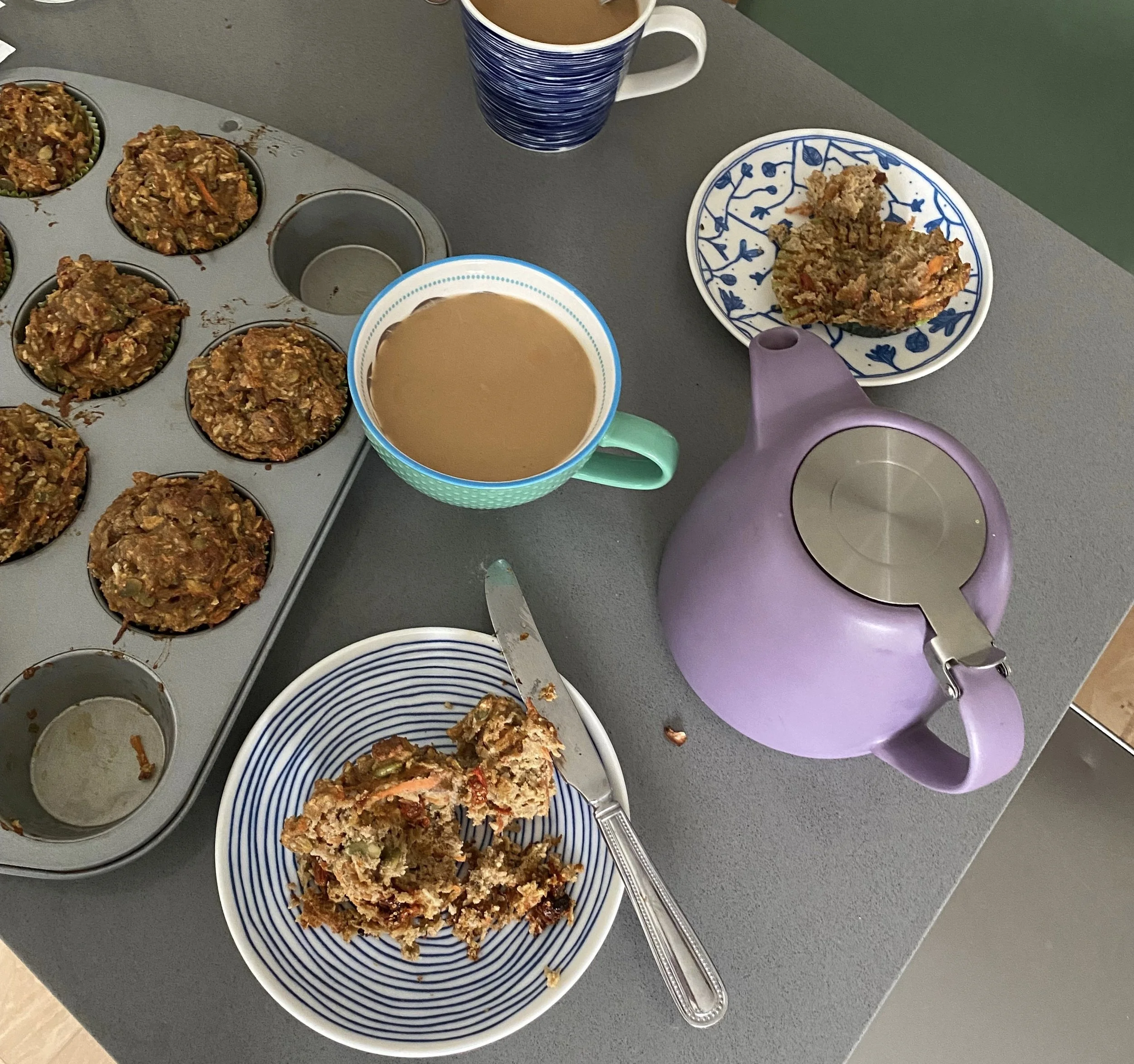
I took a recipe for Morning Glory Muffins, often considered a healthy choice, but when you buy it in Starbucks it is packed with sugar and dialled up the protein and fibre to make a moist and flavourful muffin, delivering dense nutrition that is easy on your blood sugar level in the morning.

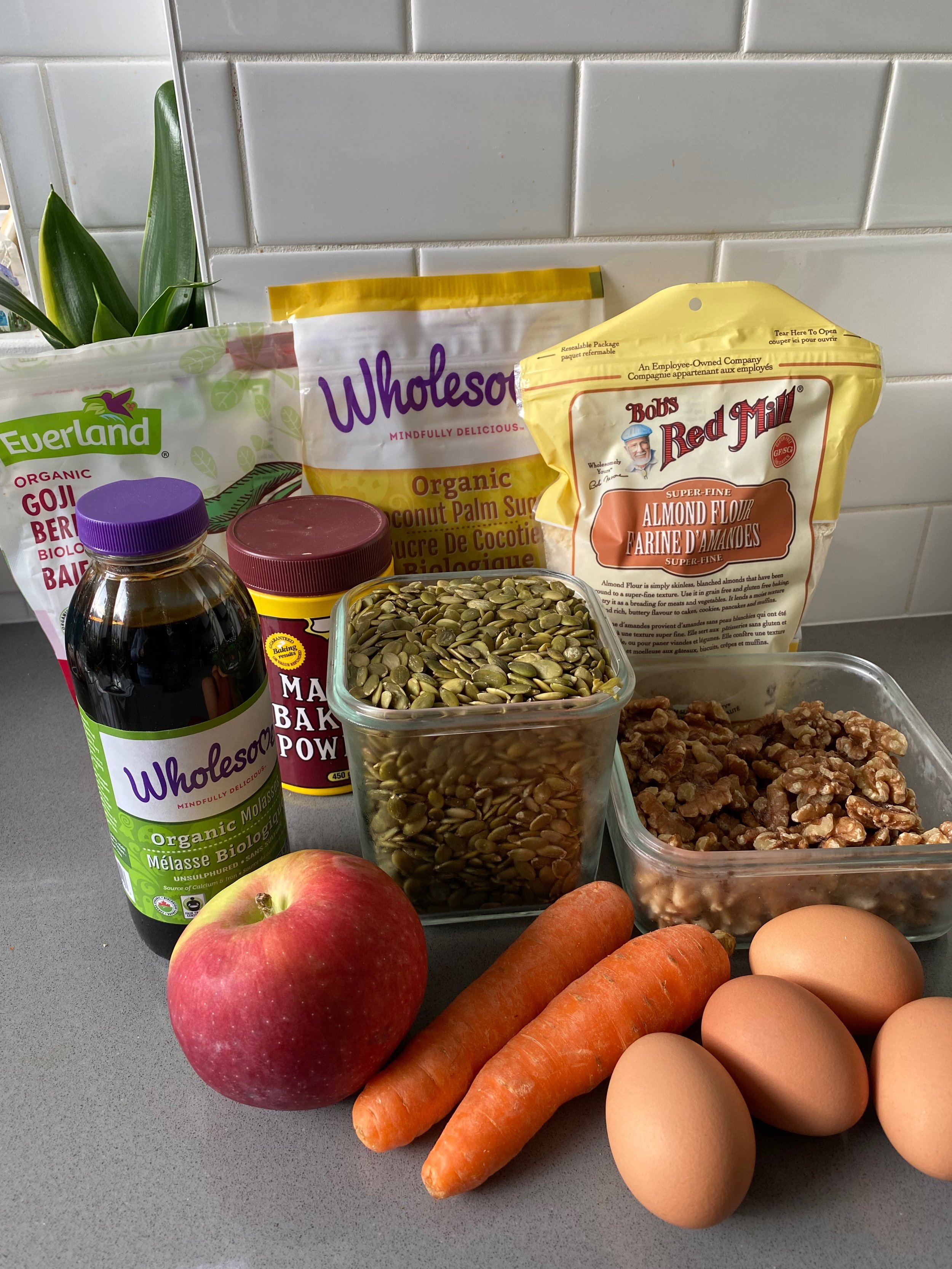
The first step was to replace grain flour with almond flour to add more protein, fibre, healthy fat and heart-healthy vitamin E. Eggs, Greek yoghurt and pumpkin seeds boost the protein content in the muffin.

Blackstrap molasses is used as the sweetener and is rich in iron for energy and to support thyroid function as well as calcium, and other trace minerals. It is an unrefined sweetener, packed with nutrition and gives the muffin a delicious malty flavour.

When our hormones start fluctuating, our body needs dense nutritional support and this muffin offers our bodies the fibre, protein and minerals we crave.
Ingredients
4 large eggs
1/2 cup greek or Icelandic Yoghurt
2 tsp pure vanilla extract
1/3 cup coconut sugar
1 tbsp Black Strap molasses
2 cups almond flour
1 cup unsweetened shredded coconut
1/4tsp baking soda
1 tsp baking powder
1/2 tsp sea salt
2 tsp ground cinnamon
1 cup grated apple (about 1 medium apple cored, keep peel)
1 cup grated carrot (about 2 medium carrots)
1/2 cup raisins or unsweetened cranberries
1/2 cup walnuts
1/3 cup pumpkin seeds

Instructions
1. Preheat the oven to 350 F 180 C
2. Line a 12 hole muffin pan with muffin papers
3. Whisk the first five ingredients together in a bowl
4. In a separate larger bowl stir together the next 6 ingredients, through to the ground cinnamon.
5. Add the grated apple, carrots, walnuts, pumpkin seeds and raisins or cranberries to the dry ingredients and stir through so the fruit and nuts are coated with the almond flour mix. This stops the heavy fruits and nuts falling to the bottom of your muffin.
6. Add the bowl of wet ingredients into the dry and stir together to combine to make a batter.
7. Portion the batter into the 12 muffin cases and bake in the over for 40 minutes or until a chopstick poked into the muffin comes out clean.
8 Cool on a rack and enjoy.
9 Because these muffins are so full moist and of fresh ingredients, they are best refrigerated or frozen individually to stay fresh.

Creamy Carrot, Chickpea and Tahini Soup

January 9, 2024 Louise Carr

In each season of our lives there are different foods to support our health.

In perimenopause, foods rich in fibre become important in our diet as they help us to manage excess hormones in our bodies, encouraging us to ‘detox’ spikes in hormones when we do our daily poop.

In Menopause, foods with specific fibres which act as phytoestrogen support our overall health, as the choices we make with our meals can drip feed us estrodiol as these lignans and isoflavins protect our brain, bone and heart health.

When we understand nutrition and how food is a tool for us to powerfully step up and support our bodies in hormonal change, we understand we have the power to manage our menopause experince and and reduce our hormonal symptoms.

You have way more power in your hands and on your plate than you realize.

Chickpeas and sesame seeds are packed with phytoestrogens and sesame seeds are also rich in easily absorbed plant based calcium. I wanted to bring these two ingredients together with collagen rich bone broth and Middle Eastern flavours to make a soup that deeply supports our joint and bone health and at the same time reduces our menopausal symptoms.

Onions, garlic and thyme form the flavour back-bone of this soup with cumin, lemon and chilli pepper flakes freshening up the flavour palate.

When the chickpeas are blended into the soup, they have a smooth and creamy texture and tahini paste adds further unctuousness, without having to add dairy.

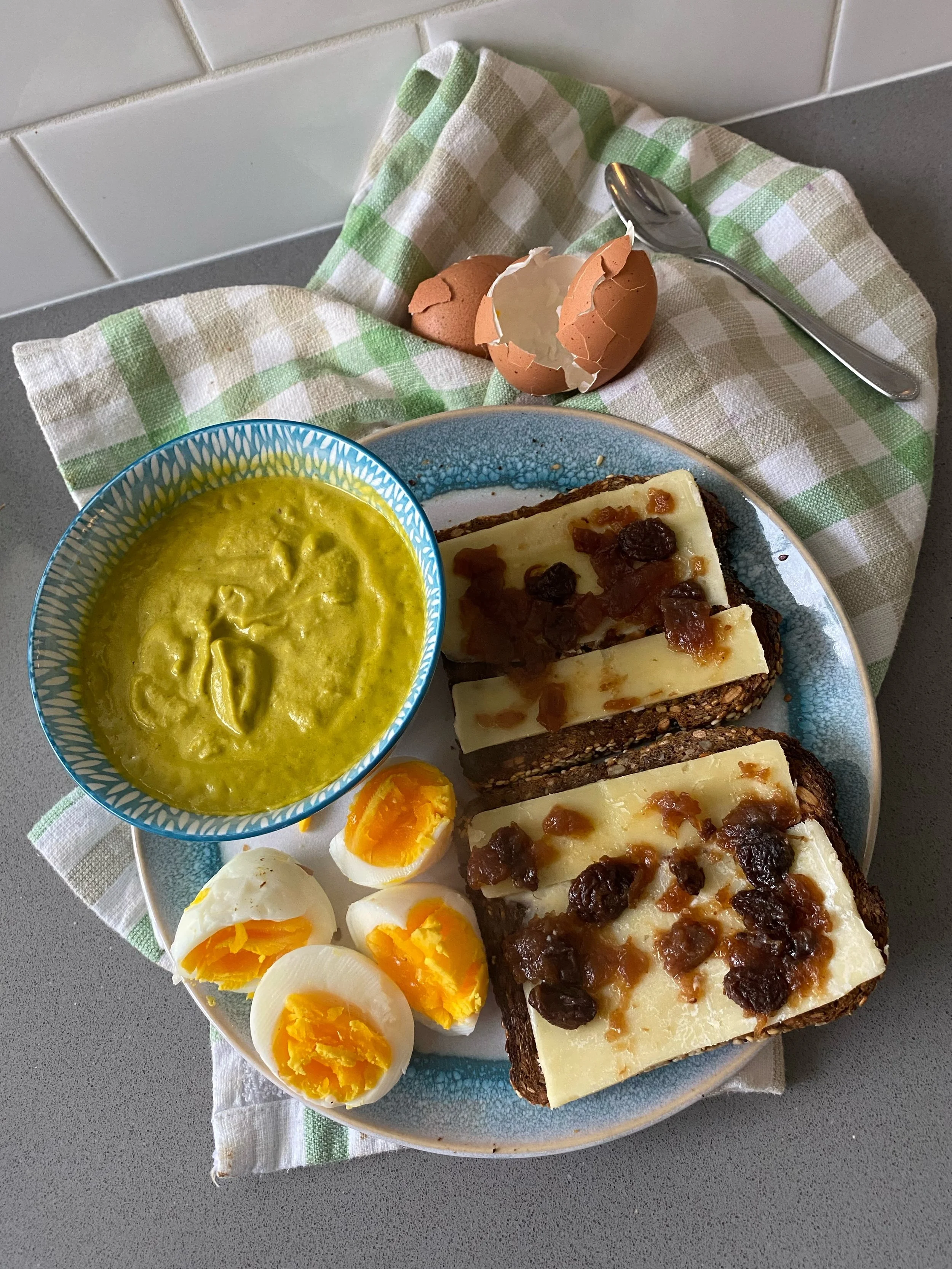
Top with 1/2 a diced avocado to extend the creamy on creamy vibe. Or serve with softly boiled eggs and cheese on toast for a perfect lunch, as I did below.

Ingredients

3 tbsp extra virgin olive oil
1 onion finely diced
3 medium carrots chopped
2 cloves garlic minced
2 sprigs fresh thyme or 1/2 tsp dried thyme
1/2 tsp red pepper flakes
1 tsp ground cumin
1 x 14 oz can chickpeas
450 ml beef or chicken broth
Juice of 1/2 lemon
4 tbsp tahini
1/2 bunch parsley

Instructions

1. Add the olive oil to a soup pan and sauté the onion, carrots, garlic, thyme, red pepper flakes and cumin on a gentle heat until the onion begins to soften.

2. Add the broth and juice of 1/2 a lemon and simmer until the carrots are soft.

3. Add the chickpeas and simmer for another 5 minutes to combine all the flavours.

4. Put the soup in a high speed blender adding 4 tbsp tahini and 1/2 bunch parsley or add the tahini and roughly chopped parsley to the pan and blend with a hand blender until smooth.

5. Season to taste and serve with chopped vegetables and pitta bread.

Our Bodies Need Nutritional Support As Our Hormones Change In Midlife

January 4, 2024 Louise Carr

Knowledge is power, and knowing ALL the facts when making decisions about our health is empowering.​
​
We can do hard things! Give me the facts Louise!
​
What I know to be true is this: We are the women doing menopause in a toxic food environment, with chemically polluted foods, water, air and homes. We have increased stress from a pandemic, the impending climate crisis, global and societal violence and from ‘good girl’ perfectionism that keeps us keeping all the plates spinning and thinking of others before ourselves.

​
​All of these factors above come together to make it hard for us to experience energy, vibrancy and our best health in menopause. We are suffering with our symptoms and whilst it is great we are talking about menopause now, there is very little information out there to give us concrete action steps and help us to help ourselves out!​
​
Let’s look at the facts and reality of our health in our modern society and understand the symptoms we feel in our bodies.

Heads up! The stress you feel day to day and the state of your health will worsen your symptoms of menopause.

So let’s take an inventory of the nutrition and health of humans living in 2024
​​

95% of Americans and (7% of Canadians are deficient in fibre.) All age groups in the UK do not eat enough fibre.
​
​Why is this important to menopause?
​
​Fibre helps our body to clear excess hormones from the peaks and toughs of hormonal change out of the body and so reduces our symptoms. It helps to prevent colon and breast cancer.​
​
​It is estimated that 50% of us are vitamin D deficient.

Why is this important?

The symptoms of vitamin D deficiency include muscle pain, joint pain, pins and needles, fatigue, depression, and loss of bone density.
​
​At a time of life when we are losing the bone protective properties of estrogen and are prone to depression and muscle and joint pain, 50% of us are worsening these symptoms due to poor nutrition.​
​
​90% of us are lacking in vitamin E.

Vitamin E is important to prevent vaginal dryness and protect our heart health. ​

Cardiovascular disease is the #1 cause of death for midlife women and vitamin E along with fibre, healthy fats and magnesium protects our heart health. It also reduces hot flashes and hot flashes are, in fact, an indicator of poor cardiovascular health in middle aged women. We need more fibre, magnesium and vitamin E in our daily diet.
​
​According to the World Health Organization, 75% of us are deficient in magnesium. Found in all leafy greens, nuts and seeds, Magnesium is our relaxation mineral which helps us to sleep, reduces anxiety, relaxes muscle tension and stops restless legs and eye twitches. Look at the foods rich in magnesium. They are missing from our diet because we do not get enough fibre! Catch 22!
​
​One out of eight women suffer with thyroid issues in midlife. Think symptoms of thinning hair, dry skin, and uncontrollable weight gain.

A great many more women are slogging through life with undiagnosed thyroid issues, feeling sluggish, cold, and exhausted every morning.

​Your thyroid needs dense nutrition packed with minerals from your food, and if you have Hashimotos, a chronic auto-immune disease, foods to improve gut health and heal and seal the digestive tract.​
​
This ones a doozy! It is hard to talk about, carries shame, but is important.
​
​Over the past three decades to 2010, obesity prevalence has doubled in 73 countries and increased in most others. It increased again by 1/3rd in the last ten years. ​
​
Metabolic diseases affect most of us and midlife women are the most sedentary cohort in society. We feel self-conscious of our aging bodies, feel helpless about weight gain as ‘eat less and exercise more’ does not work when our hormones start changing and don’t like to move when we are exhausted and aching.
​
Weight gain and metabolic issues cause increased hot flashes, anxiety as our blood sugar spikes and crashes along with our hormones, brain fog, an increase cortisol, our stress hormone. ​
​
​HEADS UP!
In midlife, high cortisol STEALS your juicy hormones which will push you off a hormonal cliff. ​

​
As estrogen and progesterone deplete, your very own body will steal the building blocks for these hormones to build cortisol!
​
This damages your heart and bone health, drives hot flashes and sugar cravings, causes weight gain around the middle, brain fog, muscle wasting, anxiety and exhaustion. It shortens your telomeres.
​
​It is more than likely MANY of your uncomfortable symptoms of menopause aren't caused by natural hormonal changes, but rather by nutritional depletion and metabolic challenges.​
​
That’s why women feel so much better in their bodies when they take actions like giving up caffeine or alcohol, feel their aches and pains vanish when they eat collagen or more leafy greens and watch weight release and energy rise when they eat MORE densely nutritious foods.
​
​Addressing our crappy diet and deeply nourishing our bodies with a whole foods diet is the first step to regaining energy, sleep, and vibrant health during hormonal changes. You will feel your body sigh with relief!​
​

This step can be hard because we have been conditioned to control our bodies, value our weight above our health and to fit a standard cookie cutter size or look to be pretty. We need to unhook from this thinking with mindset work and support is helpful.
​​
I am not anti-HRT. I just don’t agree with putting the cart before the horse and medicating with hormones for what are nutritional issues.

In the event that we are still experiencing symptoms AFTER we have given our beautiful bodies the nutritional support it needs to calmly pass through this chapter in life, we should consider talking to our doctor about HRT.​
​
If we choose, to view our bodies and menopause as a machine needing a simple fix; a lift the hood and top the old girl up situation, rather than an opportunity to learn, make positive health changes and nourish our bodies, we abandon our responsibility for our personal health and lose our power to naturally increase our energy, reduce our symptoms and BUILD health in our bodies ready for an exciting next chapter.
​

If you recognize the uncomfortable symptoms described in this post, you can start to eat more of the foods your body needs to feel supported TODAY, by clicking the button below and down loading my recipe book.

Get Your recipe book here!
← Newer Posts Older Posts →

Copyright © 2024 Louise Carr Nutrition All rights reserved

Privacy Policy Terms of Use